




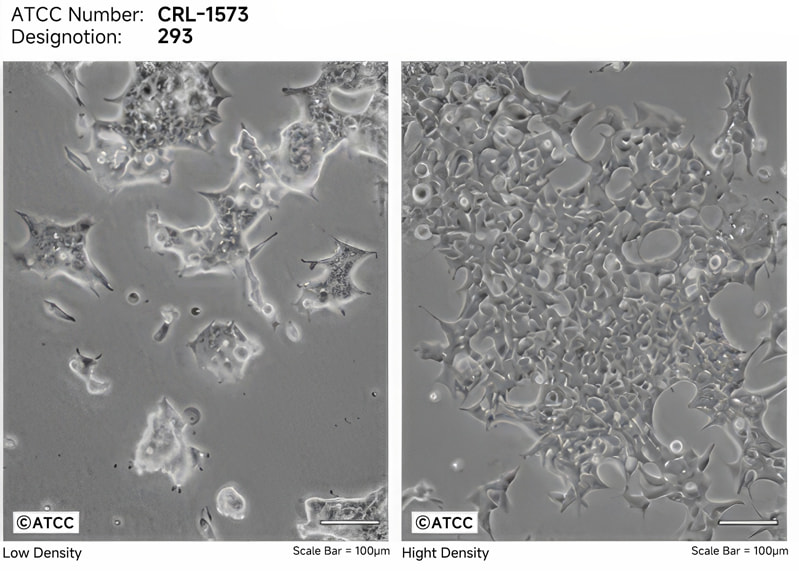
“Why can HEK293 cells, the 'star cells‘ of biomedical research, become the first choice for gene therapy, virus packaging, and protein expression?
Traditional transfection techniques have low efficiency and high cell damage. How can they break through the bottleneck?
ANRim biotechnology brings unique nano-needle transfection technology to HEK293 cells, which completely releases the potential of HEK293 cells!
01
The birth of HEK293: The perfect encounter between Virus and cell
▶ Historic moment
1972: In a Dutch laboratory, the adenovirus type 5 E1 gene was artificially inserted into human embryonic kidney cells (experiment number 293), and an immortal cell line was accidentally obtained.
▶ Why is it unique?
Adenovirus gene blessing: The integrated E1 gene gives cells efficient protein expression and virus packaging advantages.
“King of Tool cells”: In the past 50 years, he has supported tens of thousands of research papers and has become the ”behind-the-scenes hero” of gene therapy and vaccine development.
02
293 Family Evolution: Super Cells with their own strengths
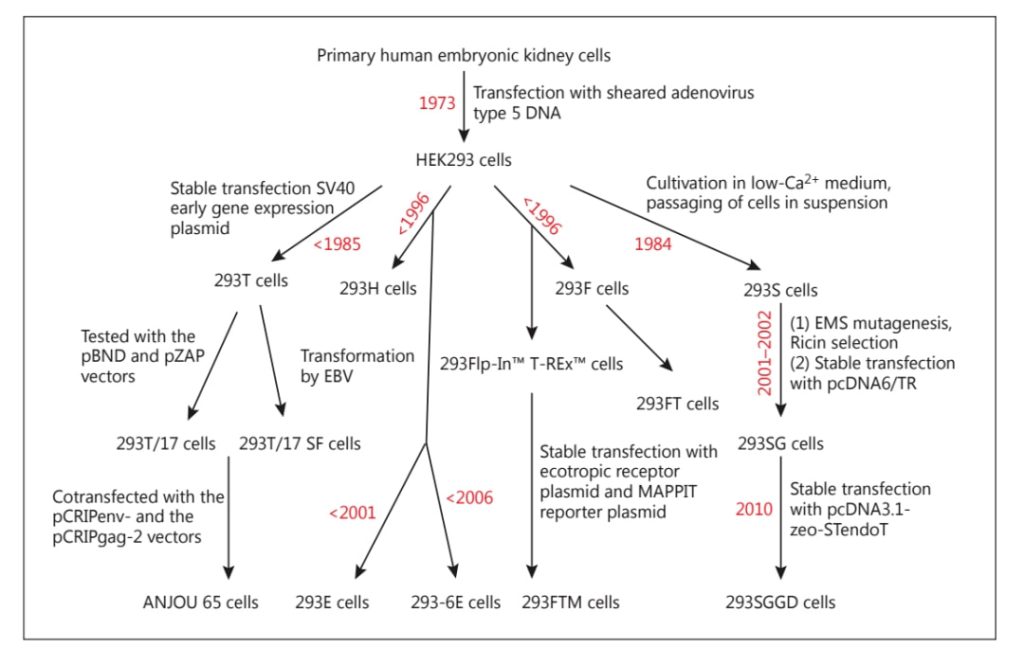
Genealogy of HEK293 and its derived cells
HEK293 cells and their derived cell lines are core tools for biomedical research, recombinant protein production, and viral vector development. Different derived strains have unique characteristics and application scenarios due to different genetic modification or screening conditions. The following is the classification and comparison of mainstream HEK293 cell lines:
1. Basic HEK293 and its classic derivatives
1. HEK293 (Original Co., Ltd.)
- Source: Obtained in 1977 by Dr. Frank Graham using the Ad5 E1A/E1B gene to transform human embryonic kidney cells.
- Features: Easy to transfect, suitable for exogenous gene expression.
- Disadvantages: Poor adhesion to the wall, easy to lose cells in inheritance.
- Uses: Basic research, protein expression.
2. HEK293T (SV40 T antigen enhanced)
- Source: Stanford University was transformed by transfection of SV40 large T antigen plasmid.
- Features: High transfection efficiency (>90%), can amplify vectors containing SV40 ori. Because SV40 T inhibits p53, genomic stability is low.
- Uses: Virus packaging (lentivirus, adenovirus), high-expression protein production.
3. HEK293S (suspension adaptation type)
- Source: Obtained by long-term suspension culture screening.
- Features: It can be grown in serum-free suspension medium, which is suitable for large-scale culture.
- Disadvantages: The genome is highly unstable (such as MYC gene amplification).
- Uses: Industrial protein production, preparation of viral vectors.
4. HEK293F (serum-free suspension clone)
- Source: Suspension adaptation clones selected from HEK293.
- Features: Fast growth, suitable for chemical composition determination (CDM) medium. The transfection efficiency is high and the protein expression level is stable.
- Purpose: Commercial production of recombinant proteins (such as antibodies and vaccines).
2. Derivative strains of special functional transformation
5. HEK293E (EBNA-1 expression type)
- Source: Transfection of the EBV EBNA-1 gene supports free replication of the oriP plasmid.
- Features: It can significantly increase the expression of protein containing oriP vectors.
- Suitable for large-scale instantaneous transfection.
- Purpose: Efficient production of recombinant proteins.
6. HEK293-6E (EBNA1 truncated enhanced type)
- Source: Expression of truncated version of EBNA1 (Gly-Gly-Ala duplication area removed).
- Features: Higher protein yield than HEK293E, suitable for industrial applications.
- Uses: Production of monoclonal antibodies and virus-like particles (VLPs).
7. HEK293SG (glycosylation deficient type)
- Source: 293S clones with MGAT1 gene deletion were screened by EMS mutagenesis.
- Features: Only Man5GlcNAc2 type N-glycans are produced (no complex glycosylation).
- Purpose: Production of uniform glycosylated proteins (such as glycobiology research).
8. HEK293SGGD (glycosylated engineering type)
- Source: endoT glycosidase was introduced on the basis of 293SG to further simplify the sugar chain.
- Features: It can produce proteins of high mannose type or truncated sugar chains.
- Uses: Structural biology (such as crystallography research), glycoprotein drug development.
3. Other important derivative strains
9. HEK293A (high adherent type)
- Source: 293 subclones with stronger adherent walls were selected.
- Features: Single-layer growth is uniform, suitable for spot tests (such as adenovirus titer determination).
- Uses: virology experiment, plaque analysis.
10. HEK293H (serum-free adaptation type)
- Source: 293 clones adapted to serum-free medium (SFM).
- Features: Fast growth, high transfection efficiency, suitable for industrial production.
- Uses: Vaccine development, gene therapy vector production.
11. HEK293MSR (scavenger receptor expression type)
- Source: Genetic engineering to express the scavenger receptor of human macrophages.
- Features: High adhesion, suitable for cell interaction research.
- Uses: immunology, pathogen-host interaction research.
03
When 293 cells meet UniquePOKE®: Give full play to cell performance!
▌Shackles of traditional transfection
Liposomes: Low efficiency and high toxicity
Electroporation: Strong equipment dependence and high cell mortality rate
Virus method: Stable expression, but long construction cycle and high cost
“Is there a way that can be efficiently transfected without damage to cells?" ”
▌ UniquePOKE®Three innovations in nano-needle transfection reagents
Noninvasive penetration:10 years of precipitation of nano-needle technology, patented nano-needle array ”seamless" delivery;
Safe and non-toxic:0 chemical reagents! Say goodbye to cytotoxicity, the cell survival rate is UP↑, and the efficiency of difficult-to-transfect cells is significantly improved.;
Strong universality:Suitable for almost all cell types from stem cells to immune cells;
产品 Product introduction
UniquePOKE®It is an advanced nano-needle-based transfection kit designed to simplify and enhance gene delivery and is suitable for clinical and research applications. Using vertically arranged nanostructures,
UniquePOKE®It realizes efficient, low-cost and biocompatible delivery of intracellular genetic material without the need for viral vectors or chemical reagents. It provides powerful solutions for genetic modification in therapeutic cell manufacturing, including immunotherapy and stem cell engineering, and accelerates the commercialization of nano-needle biochip technology.

应用 Application case
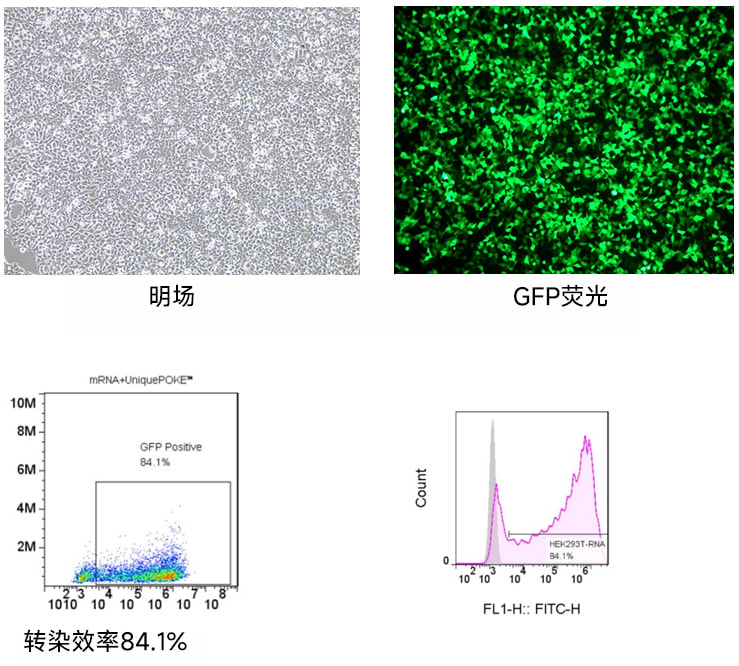
●Use UniquePOKE®Nano-needle transfection reagent delivers genetic material to HEK293T cells
04
ANRim Nano Needle Biochip
ANRim nano-needle biochip technology precisely controls the composition and surface characteristics of nanostructures to create an efficient biological interface for gene delivery. This biochip canPhysical penetrationCell membrane, to achieve high-throughput non-viral transgenic delivery without damaging the cells, thereby providing a brand-new toolkit for in vitro biological manufacturing of therapeutic-efficacious engineering cells, especially suitable for the manufacture of chimeric antigen receptor immune cells (CAR-T) and programmable stem cells (iPSC), in other cases, it is suitable for the manufacture of chimeric antigen receptor immune cells (CAR-T) and programmable stem cells (iPSC).Related fields such as immunotherapy and stem cell therapy have wide application prospects.
Relying on this technology, ANRim has built four core tools, provided genetic testing solutions, covered the entire research and development scene, and provided technical empowerment for the fields of cell therapy and genetic engineering.