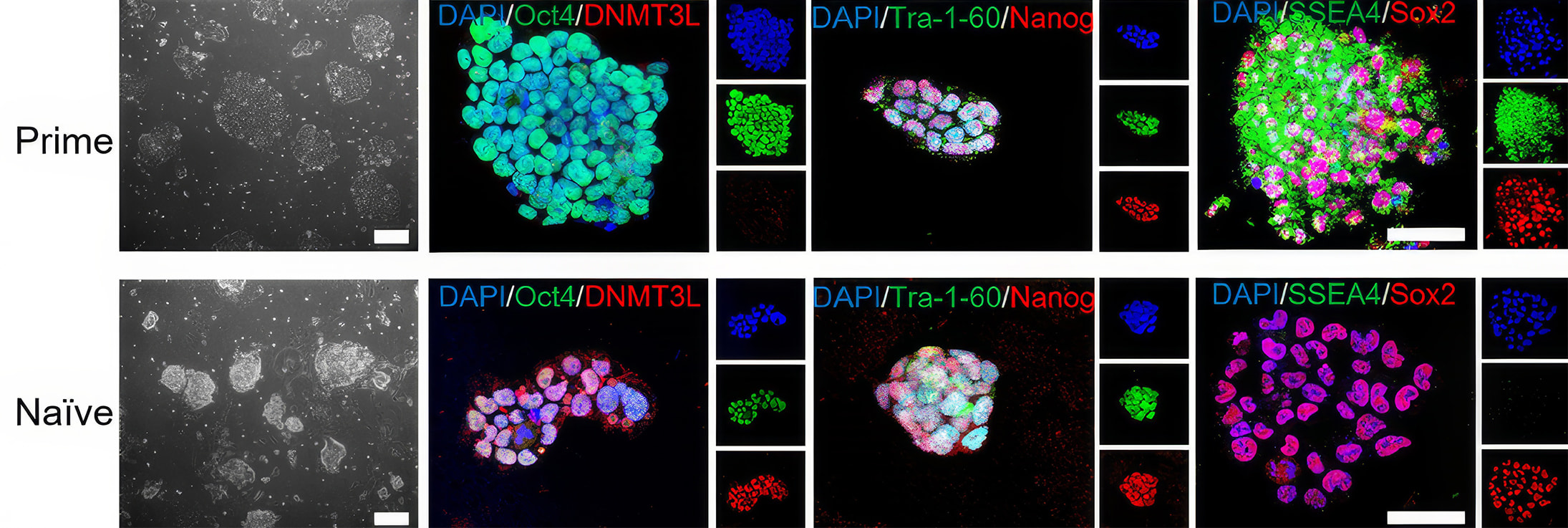
Production of induced pluripotent stem cells (iPSC)
Induced pluripotent stem cells (iPSCs) are a type of stem cell generated by artificially reprogramming adult somatic cells, such as skin or blood cells, back to a pluripotent state. iPSCs hold broad potential for applications in regenerative medicine, disease modeling, drug discovery and testing, as well as personalized medicine.
Most iPSC reprogramming relies on viral-based methods to deliver transcription factor genes into somatic cells. In contrast, ANRim scientists have developed an efficient cell reprogramming strategy that enables cytoplasmic delivery of micro-intron plasmid (MIP) vectors, converting human neonatal dermal fibroblasts (HDFn) into both naïve and primed induced pluripotent stem cells.
- 1.17% reprogramming efficiency
- Cell viability of human fibroblasts >95%
- Reprogramming efficiency increased by more than 100 times
- Clear pluripotency