




In the field of neuroscience research, there is such a cell line, which is derived from the human bone marrow and can simulate neuronal behavior. It is used to explore neurodegenerative diseases and neural differentiation mechanisms.
“Right-hand man”-it is the SH-SY5Y human neuroblastoma cell line.
PART. 01
1. "Origin” and characteristics: Why has it become the first choice for research?
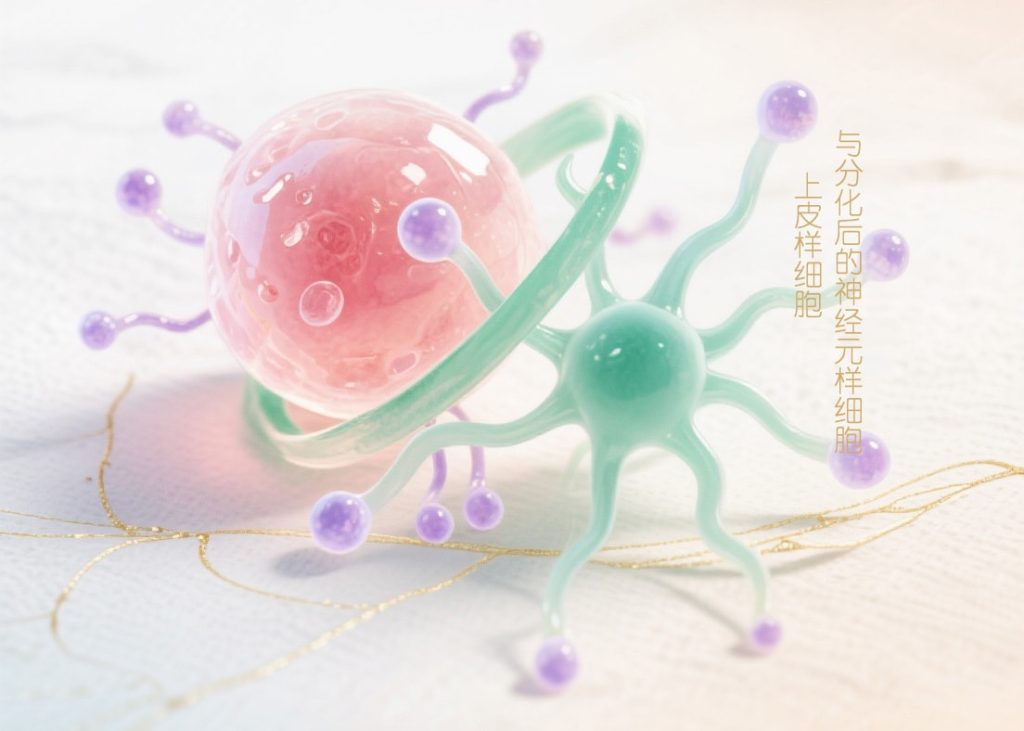
SH-SY5Y cells are a three-clone sub-line of the neuroblastoma cell line SK-N-SH, which was isolated from the bone marrow of a 4-year-old girl in 1970. In terms of morphology, physiology, and biochemical functions, it is highly similar to human cells.
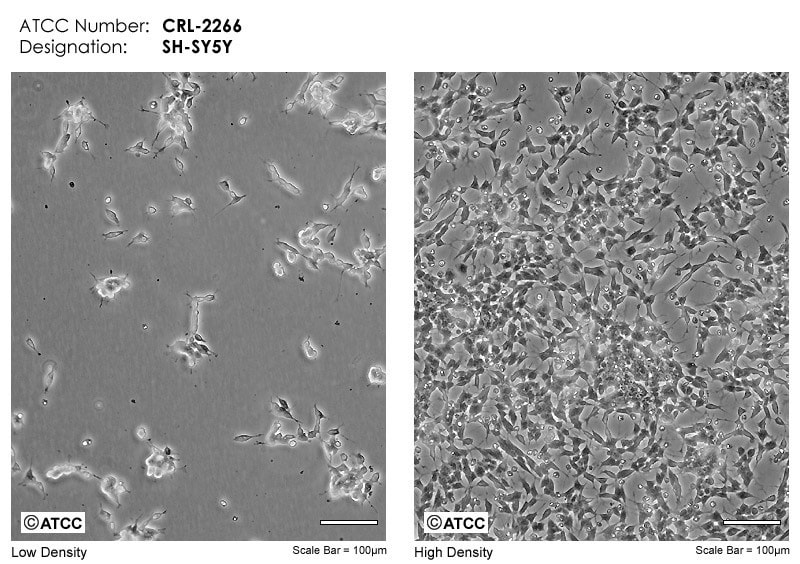
- Cell type:Neuroblastoma cells can be transformed into neuron-like cells, showing a blue-dyed small round, chrysanthemum-shaped arrangement (surrounding nerve cells rather than blood vessels, which is the key difference between them and other tumor cells).
- Growth characteristics:The unique ”semi-adherent" mode, most of the adherent walls are epithelial-like, with short tentacles and tend to grow in clusters, and a small part is suspended and round and shiny. During growth, a three-dimensional “cell island” is formed, and then gradually diffuses into a single layer, entering a logarithmic growth stage.
- Molecular and functional highlights:It expresses neuronal markers such as TH, MAP2, and β-III Tubulin, and has the ability to differentiate into various neuronal subtypes such as cholinergic, adrenergic, and dopaminergic. It also exhibits moderate levels of dopamine β-hydroxylase activity, which provides a “natural model” for neurobiological research.
- Training points:It needs to be cultured in a special complete medium at 37°C and 5% CO₂ environment; when frozen, 90% FBS and 10% DMSO are required. However, it is also a bit “small-tempered”, has weak adherent ability, and is easy to fall off when encountering low temperature, reagent overcooling, etc., It is recommended to use a coated culture bottle; And it is in an eosinophilic environment, the medium consumes quickly, and the liquid should be changed in time when the density reaches more than 70%.
PART. 02
2. Differentiation "magic": Unlock diverse neuronal phenotypes
Undifferentiated SH-SY5Y cells are neuroblast-like, with few protrusions and active proliferation; after specific induction, they can “transform” into a variety of mature neuronal subtypes.
Commonly used differentiation schemes have their own focus:
- Induction of retinoic acid (RA): It allows cells to form basic axons and present intermediate phenotypes, which are suitable for studying developing neurons.
- RA + brain-derived neurotrophic factor (BDNF) is induced sequentially: It can promote rapid cell polarization, express a large number of neuronal markers, form a phenotype closer to mature neurons in the body, and promote synaptogenesis.
- Induction of RA +Phorbo ester (TPA): It can differentiate cells into dopaminergic phenotypes and is more sensitive to neurotoxins, which is suitable for research related to Parkinson's disease.
- Other programs: In a serum-free environment, RA+GLP-1 can induce glutamate and dopaminergic neurons; Co-culture with stromal cell PA6 can quickly obtain cells close to primary neurons.
Different differentiation schemes have created the “multifaceted nature” of SH-SY5Y, allowing it to adapt to different research needs.
With suitable experimental methods, the research value of SH-SY5Y can be maximized:
- Differentiation effect verification: Use Western blot or qPCR to detect the expression of MAP2, TH and other markers, and observe the length and morphology of neurites through a microscope.
- Cell activity assessment: CCK-8 method to detect cell survival rate, LDH release experiment or Annexin V/PI double infection to assess cytotoxicity and apoptosis.
- Functional analysis:Electrophysiological recording detects membrane potential changes, and calcium imaging technology analyzes Ca2a channel activity to help study neuronal function.
- Genetic manipulation: Use CRISPR/Cas9 to construct gene-edited cell lines, or realize gene overexpression through viral vectors, and explore gene functions in depth.
PART. 03
3. Application areas: from disease research to drug screening
With its outstanding characteristics, SH-SY5Y has “demonstrated its skills” in many fields of neuroscience.
- Neurodegenerative disease research: It is the “main force” of research on Parkinson's disease and Alzheimer's disease. When simulating Parkinson's disease, toxins such as MPTP and 6–hydroxypropamine can be used to treat cells to study the mechanism of damage to dopaminergic neurons, and a synuclein aggregation model can be constructed by overexpressing mutant α-synuclein; When studying Alzheimer's disease, differentiated cells can simulate the degeneration of cholinergic neurons to form Tau phosphorylation and amylidin-β deposition models help explore the pathology of the disease.
- Neurotoxicology and drug screening: Sensitive to neurotoxins such as MPTP and 6–hydroxypropamine, it can be used to detect toxin damage and evaluate the effects of potential neuroprotective drugs, providing a reliable platform for drug development.
- Neural differentiation and development: It can be induced into a variety of neuronal subtypes. It is an ideal model for exploring the mechanism of neuronal differentiation, studying axon growth, and synaptic formation.
- Gene function and signaling pathways: Compatible with siRNA, CRISPR and other technologies, it can be used for the knock out or overexpression of specific neural function genes, and analyze key pathways such as calcium signaling and neurotransmitter release.
PART. 04
4. A good partner for scientific research: Anrui Biotechnology empowers cell engineering
1. Efficient gene delivery
As the core model of neuroscience research, SH-SY5Y cells' gene editing (such as the knock-out/overexpression of specific neural function genes) is a key step in exploring disease mechanisms and screening for targeted drugs.
However, traditional gene delivery methods often face problems such as low efficiency, easy damage to cells, and dependence on viral vectors (there are safety risks). In particular, SH-SY5Y cells have weak adherent walls and easy to clump, which further increases the difficulty of gene manipulation.
Anrui Biological's nano-needle biochip technology just happens to provide “customized solutions” for these pain points.:
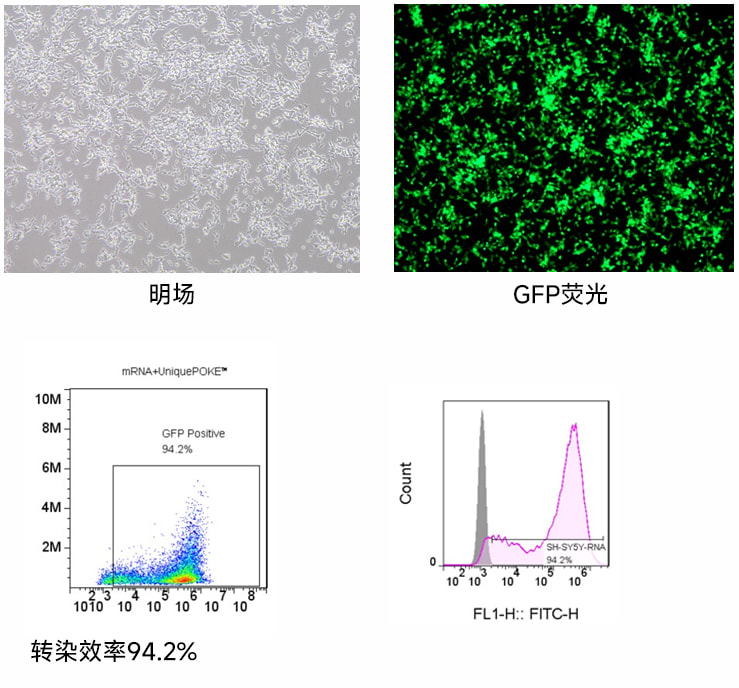
- Efficient and seamless delivery:The nano-needle array can accurately physically penetrate the SH-SY5Y cell membrane, not only avoiding the mechanical damage to the cell by violent operation (in line with its weak adherent wall and easy to fall off characteristics), but also eliminating the need to rely on viral vectors to reduce safety risks from the source and achieve “non-destructive” gene delivery.
- Adapt to cell characteristics:In view of the characteristics of semi-adherent and cluster growth of SH-SY5Y cells, the high-throughput delivery capacity of nano-needle biochips can cover the cells in the cluster and adherent cells, ensure the uniformity of gene delivery, and solve the problem of “some cells are difficult to contact the vector” in traditional methods.
- Research on Empowerment and Diversity:Whether it is carrying out siRNA-mediated gene silencing of SH-SY5Y cells (such as exploring the influence of alpha-synuclein genes on models of Parkinson's disease), or CRISPR/Cas9-mediated gene knockouts (such as editing APP genes to build Alzheimer's disease models), nano-needle biochips can efficiently complete transgenic delivery.It provides stable and reliable technical support for the gene function research of SH-SY5Y cells.
Case
Use UbiquePOKE®Nano-needle transfection reagent delivers genetic material to SH-SY5Y cells
2. High-resolution spatial transcriptome analysis
In the study of SH-SY5Y cells, the spatial distribution information of gene expression is essential.
For example, after differentiation into dopaminergic neurons, the expression location of the TH (tyrosine hydroxylase) gene in the cell and the spatial association with other neural markers (such as MAP2) directly reflect the degree of neuronal maturity; when constructing a model of Alzheimer's disease, the expression area of the tau protein gene and the APP gene is also related to the degree of neuronal maturity.Pathological characteristics (nerve fiber tangles, amylidin-β deposits) are closely related. However, traditional transcriptome analysis is difficult to retain spatial information and cannot accurately restore the “spatial context” of gene expression.
Anrui Biological's SpectrumFISH technology opens a new window for the spatial gene research of SH-SY5Y cells:
- In situ capture + spatial positioning: Using a surface chemically modified nano-needle array, it penetrates the SH-SY5Y cell membrane (or cells in tissue sections), captures the target RNA (such as the mRNA of key genes such as TH, tau, APP, etc.) in situ, and accurately retains the spatial coordinate information of the RNA molecule through the integrated spatial barcode, which is perfectly restored.The expression location of genes in the cell.
- High-resolution analysis: To achieve single-cell to subcellular resolution, it can clearly observe the expression differences of neural marker genes (such as β-III Tubulin, Synaptophysin) in the protrusion and cell body during the differentiation of SH-SY5Y cells; It can also track neurotoxins (such as MPTP, 6-OHDA) after treatment, intracellular expression differences can be clearly observed.The spatial expression changes of protective genes provide more detailed data for the study of neurotoxic mechanisms.
- Combination of high-throughput and big data: With an exclusive patented high-throughput fluorescence detection scheme and a customized big data analysis process, multiple differentially expressed genes in SH-SY5Y cells can be analyzed at the same time, and key gene networks in neural differentiation and disease model construction can be quickly tapped, greatly improving research efficiency.
With its unique characteristics and wide range of applications, the SH-SY5Y cell line has become the “cornerstone” of neuroscience research, and Anrui Biological's nano-technology empowers it to make scientific research and exploration more efficient and accurate!